The Cape Wrath Trail has a bit of a reputation – and for good reason. It’s one of the most remote and challenging long-distance routes in the UK, winding roughly 240 miles from Fort William to the lighthouse at Cape Wrath. It’s stunning, brutal, frustrating, and unforgettable all at once.
Often dubbed as the ‘UK’s Toughest Trail’, there’s no official route, no waymarks, and quite often there’s not even a path. When I was contemplating hiking the trail, I asked myself multiple times: ‘Am I actually ready for this?’ A lot of information I found talked about bog and bad weather – valid in hindsight – but offered few structured tips of things to consider before heading out.
With this post I hope to provide the answers I wish I had – a complete list of what you should know and do before the Cape Wrath Trail.
In this guide:
Essential Skills
You don’t need elite outdoor training to hike the Cape Wrath Trail, but you do need solid fundamentals.
Navigation
Most days are straightforward in clear weather, though you still need to be able to keep yourself right on pathless terrain. In low visibility it’s very easy to veer off course in some places. Therefore it is essential to:
- Be able to use maps and a compass.
These days many of us will use apps for navigation – but I would always recommend having a physical navigation system as a backup and know how to use it. Backpacker.com has a good article about using a compass, or consider following a short course. - Carry multiple forms of navigation
Apps are great, and I primarily used GPX files loaded into AllTrails for my hike. Having said that, you should always carry a backup, such as a map & compass and/or a GPS. I personally had all three – my inReach was primarily for communication/SOS, but I had the GPX files on it just in case.
Water Crossings
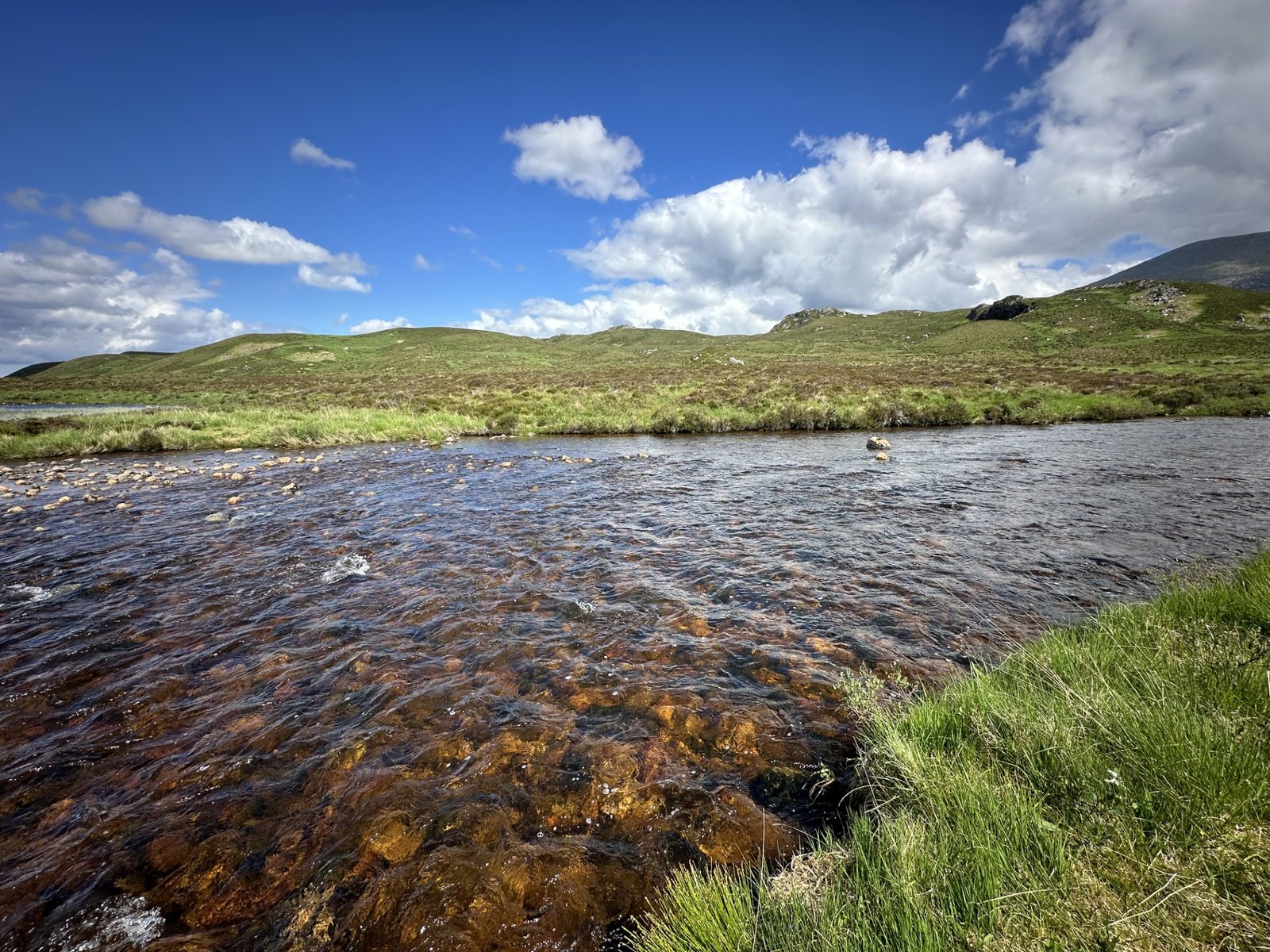
Arguably the biggest hazard you will likely face. People have died crossing rivers on this trail – I don’t say this to put you off, just to emphasize that a river in spate is not to be underestimated. Ideally you should have some experience crossing rivers above knee-high level. I cannot stress enough how important it is to wait or turn around if conditions are not suitable – I have done this myself in Glen Loyne on the Great Glen alternate in torrential rain.
You need to:
- Know how to judge safe vs unsafe crossings. Are you unsure? Don’t risk it.
- Be willing and able to wait for rivers to drop. Unless the rain is continuous, the conditions will generally improve by the next day.
- Have alternative routes in mind, or identify an exit route – check out my article about getting to and from the Cape Wrath Trail – it includes bail out points.
Self-Sufficiency
While you may not be alone the entire trail, you should be comfortable handling small problems alone. Be prepared for:
- Long stretches without facilities, phone signal, or shelter.
- Managing gear failures (take a small gear repair kit)
- Wet gear
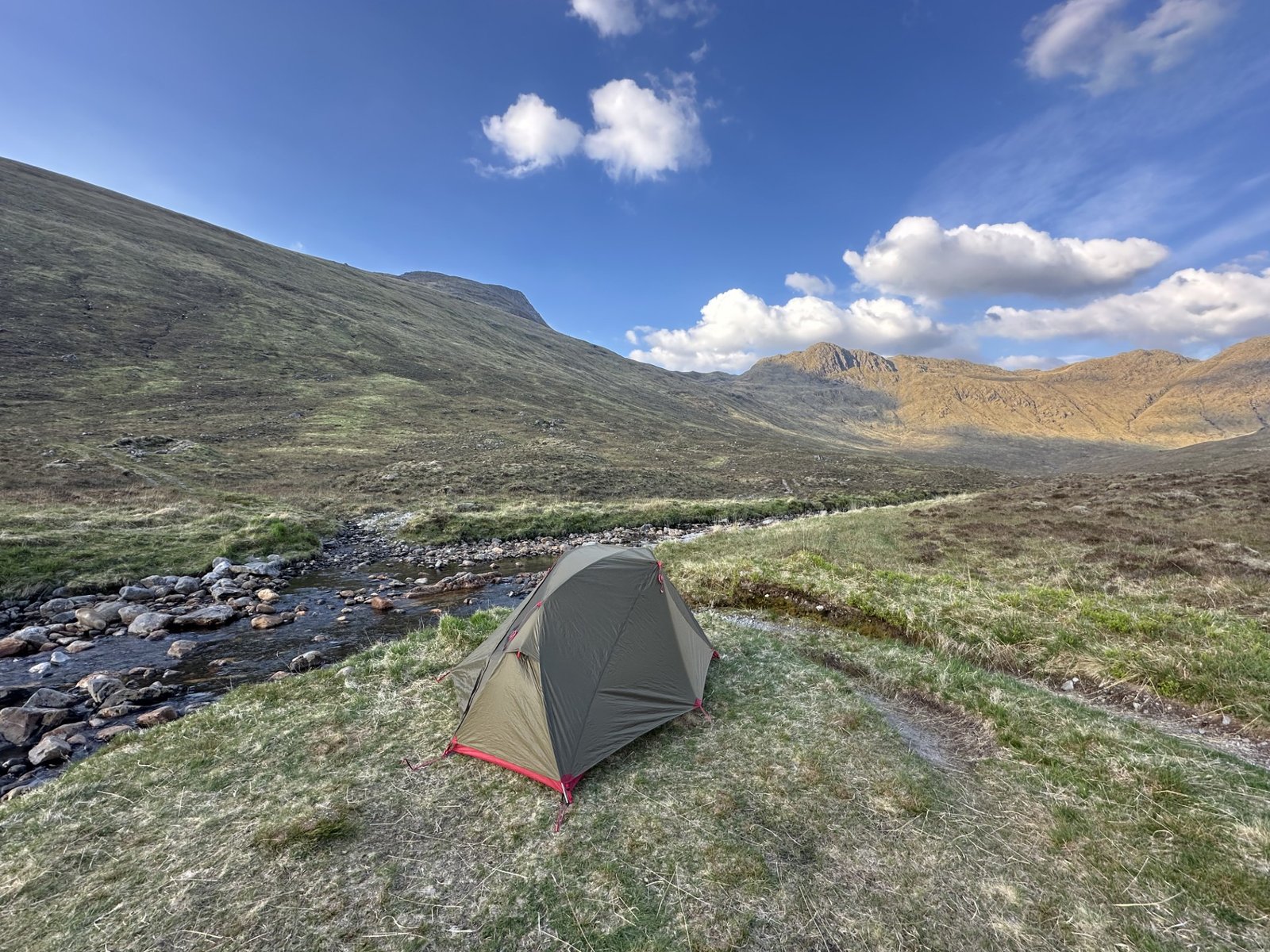
- Pitching your tent in poor conditions
If any of these skills feel a bit rusty or unknown to you, consider getting some additional practice in before heading out on the Cape Wrath Trail.
Fitness & Experience
You don’t need to be an athlete to complete the trail – what you do need is being comfortable with long, hard days carrying a pack. Being in decent shape will definitely help you here – I was not particularly fit when I did the trail, but at the end of the day it would have helped with my enjoyment had I been. Dogged determination can compensate here to a certain extent. The most important thing is that you account for your fitness level in your scheduling/pacing estimations.
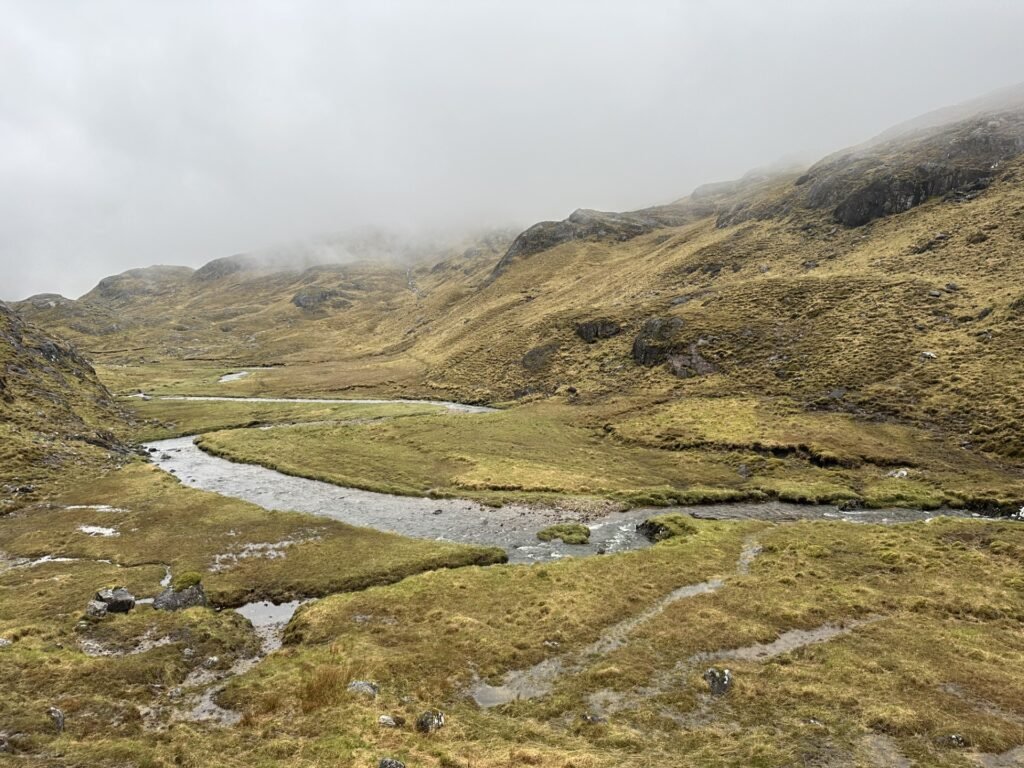
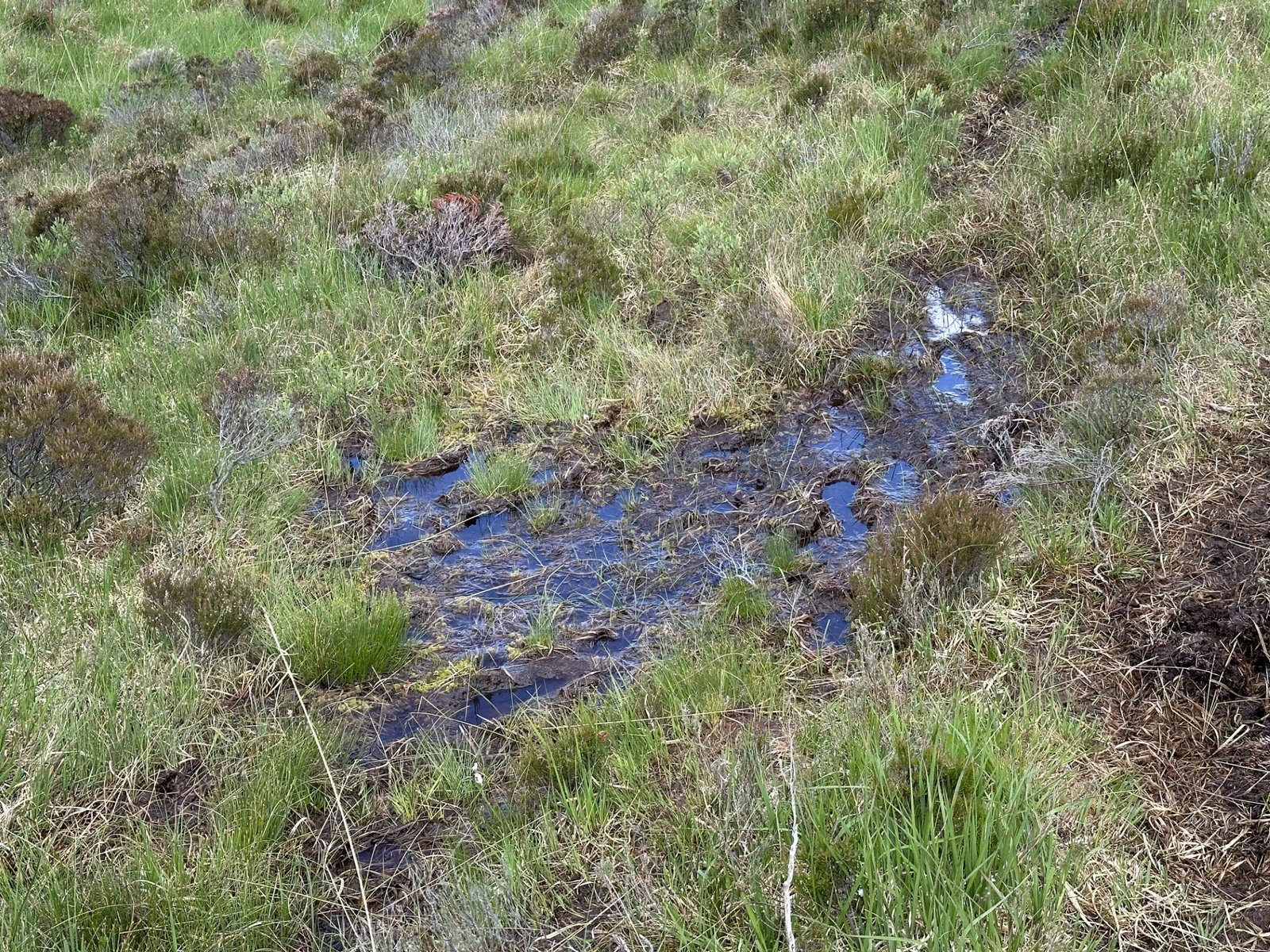
In terms of terrain, there is no scrambling or particularly steep climbs (at least not on the most popular routes), however there will be plenty of bog and pathless terrain you need to navigate around. Hiking in bog can be slow and tiring – always test mud patches with a hiking pole before stepping in them – take it from someone who went ass-deep in a bog in Glen Dessary.
In summary be prepared for:
- Long days with a loaded pack
- Deep bog to manoeuvre around
- Rocky, uneven ground
- Lots of damp, wet conditions
If you’ve done multi-day hikes, wild camps, or long hill days in Scotland, you’re in a great position already. If most of your experience is on good paths, consider a warm-up trip in Knoydart, Fisherfield, or Torridon to see how you get on with rougher ground.
Choosing Your Route
One of the first things many people don’t realise is that there isn’t a set Cape Wrath Trail – it’s just about getting from Fort William to Cape Wrath. You can adapt parts of the route based on difficulty, the weather etc. I highly recommend investing in the Harvey Maps – South and North – for the trail. They not only help with navigation, but indicate what the trail conditions are – e.g. vehicle track / path / pathless. The Cicerone Guide also has detailed descriptions for each section of the widely used routes, so that’s worth getting if you want some additional preparation.
Some of the bigger route variation decisions to make:
Knoydart vs Great Glen
Knoydart immediately throws you in at the deep-end, crossing rough, remote terrain after leaving Glenfinnan, with multiple potentially hazardous river crossings and few chances of resupply. The Great Glen alternative is slightly more forgiving for those wanting to ease their way into the trail, though Glen Loyne certainly provides an introduction to bog and a wade-worthy river crossing.
Torridon vs Coulin Pass
The route through Torridon, which goes round the back of Beinn Eighe is widely viewed as some of the finest of the trail, however it is also some of the hardest. Coulin Pass presents an easier, shorter alternative. You can easily get to Coulin Pass from Craig, or by following one of several routes from Strathcarron.
When planning, think about:
- Your fitness level
- How comfortable you are with pathless terrain
- How much time you have
- Your bail-out points
- Weather-safe alternatives
This trail rewards flexibility, not rigidity.
Required Gear
The most important thing you need to consider is whether your gear will stand up to Scottish conditions – you should always assume the worst weather-wise, this will mean you are a lot more prepared and comfortable should it actually be that bad. The absolute must haves are:
- Waterproof jacket & trousers that can survive heavy rain
- A tent that can handle heavy wind and rain
- Footwear you know and trust, ideally with some waterproof socks
- Backup navigation (map + compass and/or GPS device)
- A decent first-aid and blister kit
- A way to call for help in an emergency (PLB or inReach recommended)
The rest of your gear is up to you and will also be dependent on the time of year you are hiking. You don’t need the most expensive ultralight gear – some may not even perform well in poor conditions – but your body will thank you for not packing everything but the kitchen sink. Aim for a balance of lightweight but good quality gear and avoid packing too many luxuries.
Mental Preparation
Long distance hikes in remote terrain can be tough mentally – whether it’s falling in a bog, day after day of rain, or just accumulated exhaustion. Sometimes this aspect of a hike can be more difficult than the hiking itself. Here’s what to expect:
Plenty of quiet time
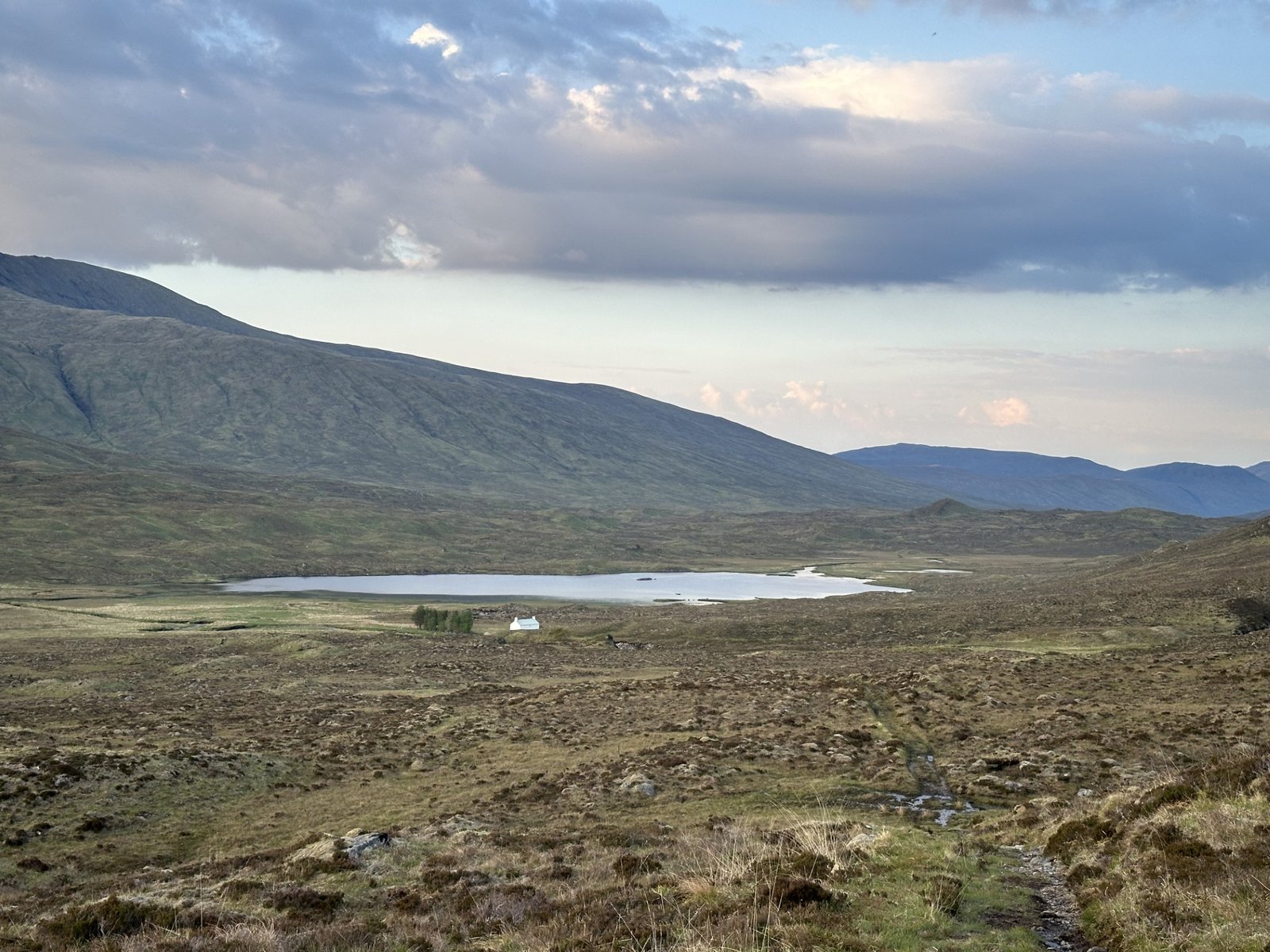
You’ll likely have long stretches with no one else around. Many people find this one of the best parts, but it can be lonely at times. My record on trail was four days without seeing any other hikers. If you are uncomfortable hiking and camping alone for extended stretches, this may not be the trail for you.
Slower days on rough terrain
Some sections are really boggy, with no path and this can slow progress considerably. Make sure you account for walking slower than usual, so you are not left stressing about your schedule.
A bit of damp discomfort
You are unlikely to be able to avoid wet gear and wet feet during your time on trail, unless you get lucky with the weather. Keep yourself safe and comfortable by keeping sleeping clothes/gear dry and having a way to help keep your feet dry – like river crossing sandals and waterproof socks.
Flexibility is key
Weather, river levels, and energy levels might shift your plans. Being relaxed about adjusting your day will make the whole journey feel more enjoyable and less pressured.
Are You Ready? A Quick Checklist
You’re probably ready for the Cape Wrath Trail if:
- You’re confident navigating off-path with map + compass
- You’ve done multi-day hikes carrying your all your gear
- You’re comfortable being self-sufficient in remote terrain
- You know how to assess rivers and weather
- You’re mentally okay with discomfort
- You can adapt plans based on your situation
If not, don’t worry! There are many long distance trails in Scotland you can practice on and still have a great experience – check out my Scotland Hiking Guides for some options.
Final Thoughts
The Cape Wrath Trail isn’t about speed or perfect gear – it’s about resilience and resourcefulness. If you go in prepared and realistic, it will reward you with one of the most memorable journeys in the UK.
Do you think I missed anything? Let me know in the comments below!